Water Damage Restoration
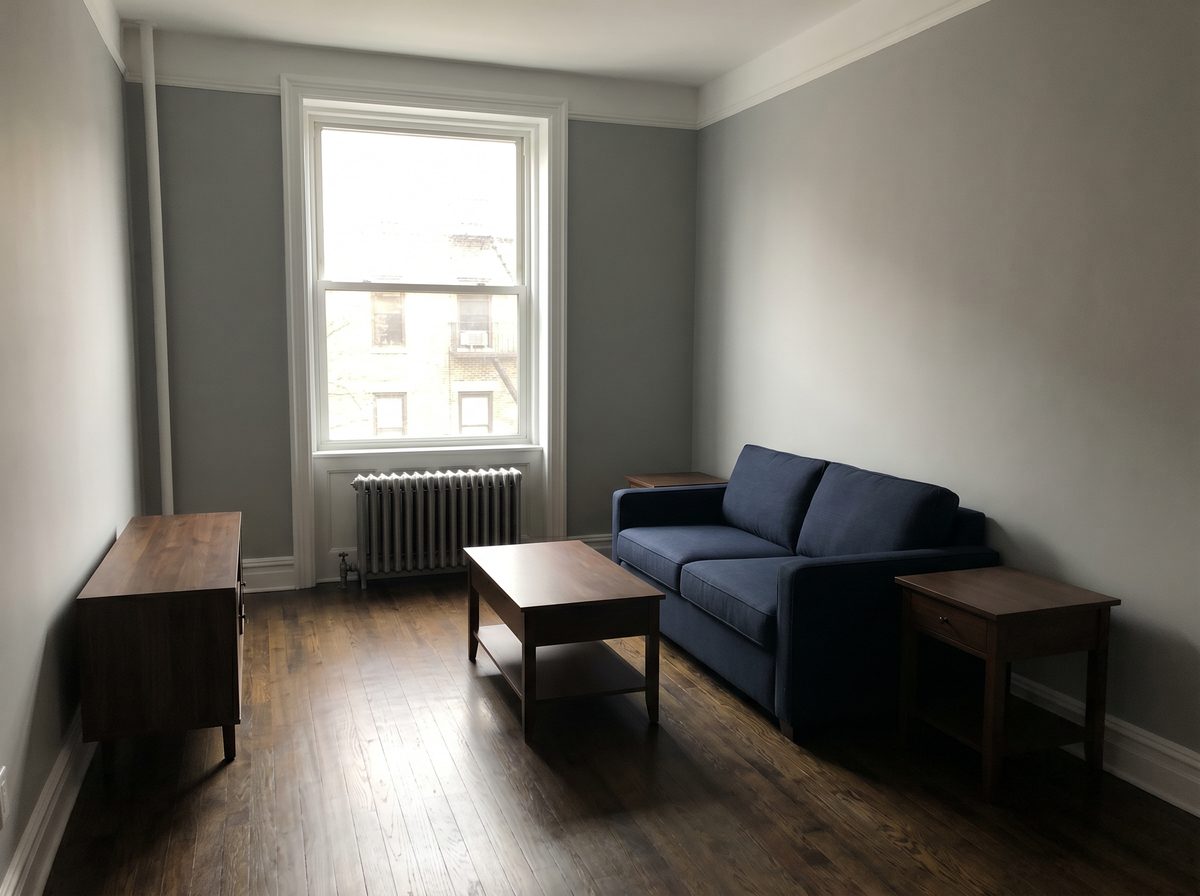
Water damage restoration covers the full process of returning a space to its pre-damage condition after a water event. This involves assessment, water removal, drying, cleaning, and repair work. In Manhattan apartments, water damage often comes from plumbing failures, appliance malfunctions, or water entering from adjacent units.
We start by evaluating the affected area to understand how far the water has traveled and what materials are impacted. From there, we extract standing water, set up drying equipment, and monitor the space over the following days. Once everything is dry, we handle repairs to drywall, paint, trim, and other finishes as needed. The goal is to get your space back to normal with as little disruption as possible.
Every restoration job is unique. A kitchen flood from a broken supply line is handled differently than water seeping through a ceiling from an upstairs unit. We tailor our approach to the specific situation.
Water Cleanup
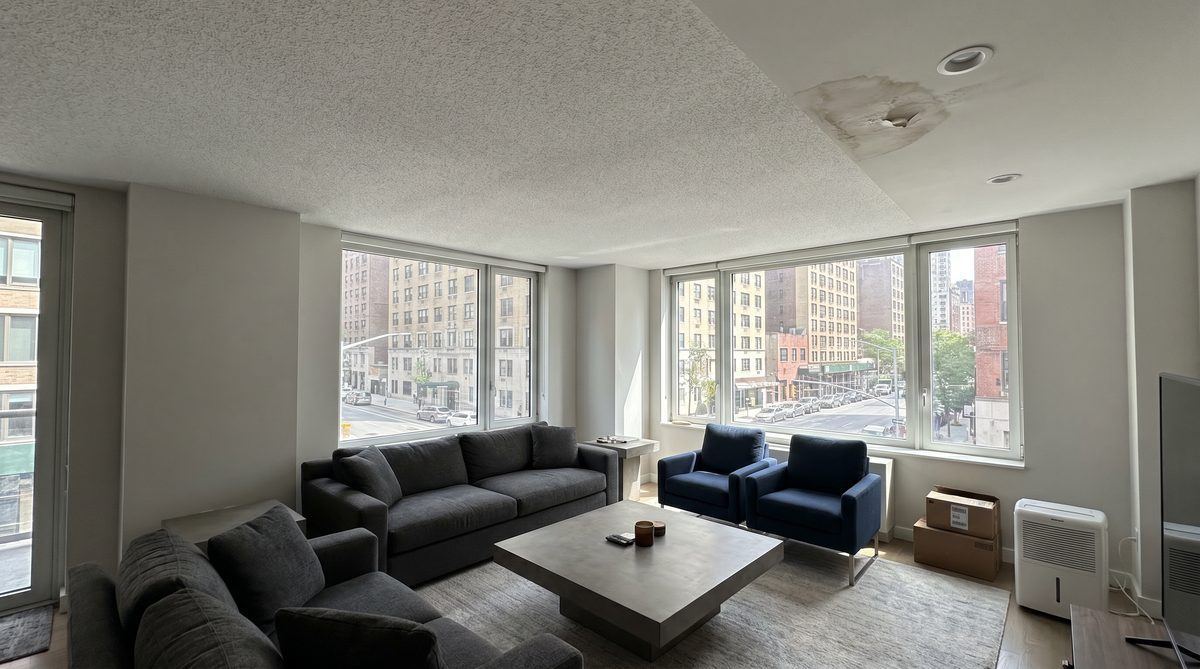
Water cleanup is the immediate response phase — removing standing water and surface moisture before it causes further damage. In apartment settings, this is often the most time-sensitive part of the process. Water sitting on hardwood floors, seeping into carpet padding, or pooling behind baseboards can cause significant secondary damage within hours.
We use commercial-grade extraction equipment to remove water from floors, carpets, and other surfaces. Truck-mounted and portable extractors allow us to work efficiently in apartment spaces where access can be limited. We also remove saturated materials like carpet padding or damaged drywall sections that cannot be effectively dried in place.
Quick cleanup reduces the overall scope of restoration needed. The sooner water is removed, the less likely you are to deal with warped flooring, swollen baseboards, or mold development. If you discover water in your apartment, the first step is always to stop the source and begin removal as soon as possible.
Leak Damage Support
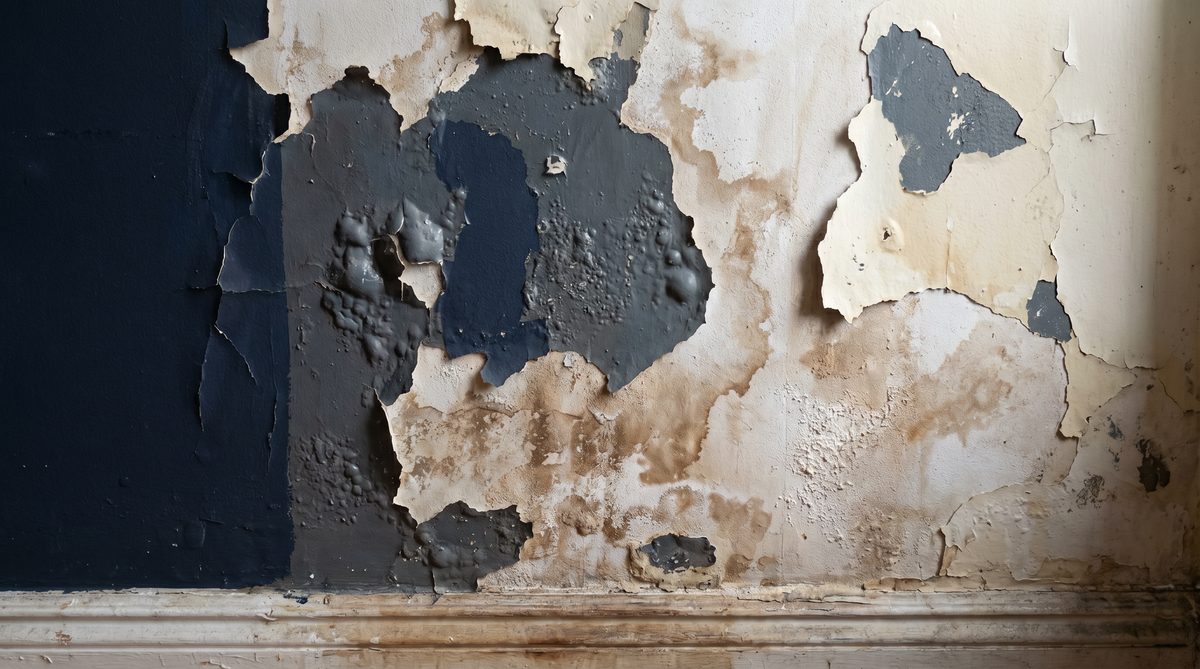
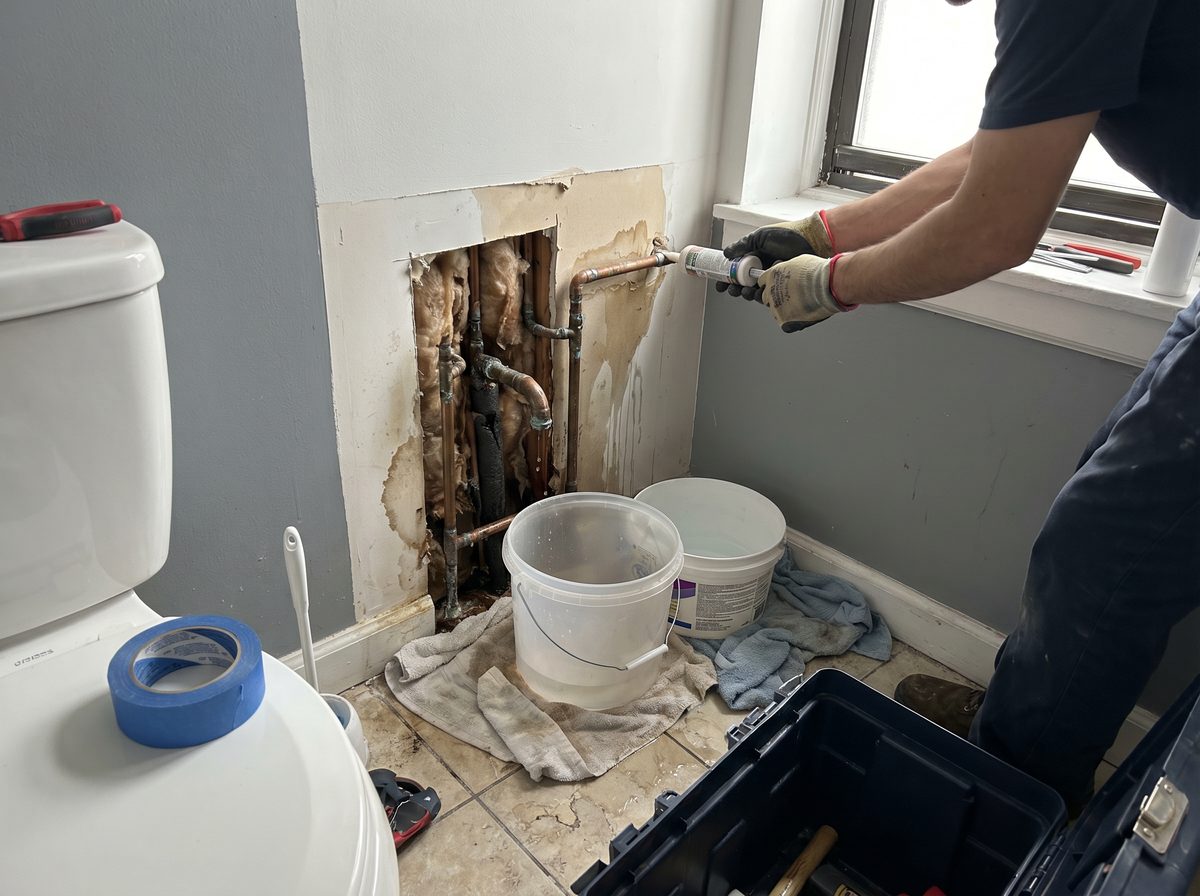
Leaks are one of the most common causes of water damage in Manhattan apartments. They can come from aging plumbing, failed supply lines, radiator connections, or water entering from a neighboring unit. Sometimes a small, slow leak goes unnoticed for weeks before the damage becomes visible — a stain on the ceiling, bubbling paint, or a soft spot in the floor.
We help with the aftermath of leak damage. Once the source has been addressed (either by you, your building's plumber, or a licensed plumber we can recommend), we handle the cleanup and restoration side. That includes drying out affected areas, removing damaged materials, and repairing walls, ceilings, and floors.
For slow leaks that have been present for a while, we use moisture meters to map the full extent of the damage, which is often more widespread than what's visible on the surface. This helps us make sure we're drying and repairing everything that needs attention, not just the obvious spots.
Structural Drying
After water has been extracted, the affected structure still holds moisture. Walls, subfloors, framing, and insulation can retain water long after the visible puddles are gone. Structural drying is the process of removing that trapped moisture using controlled airflow and dehumidification.
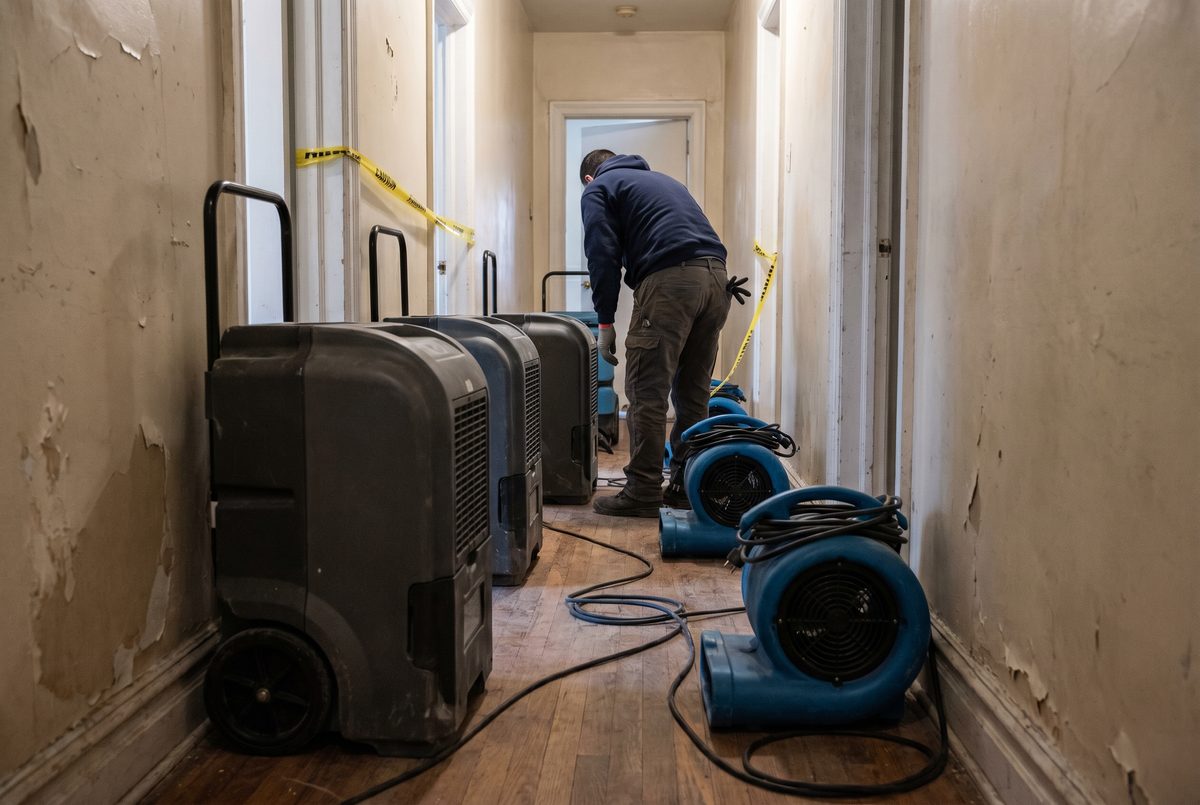
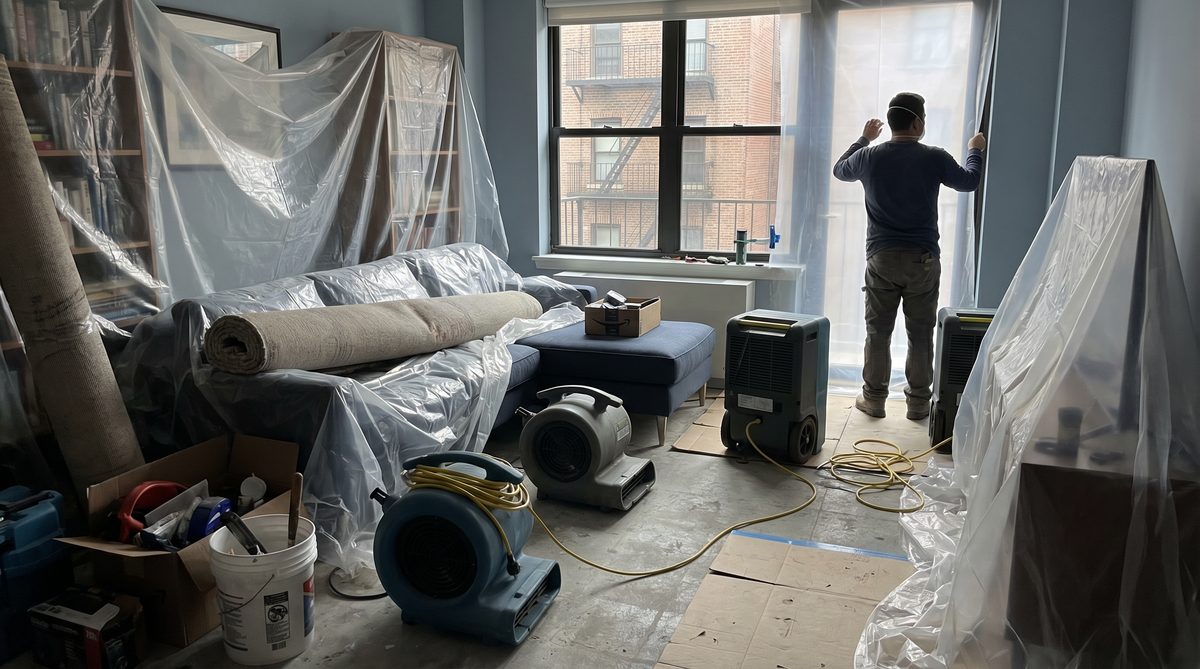
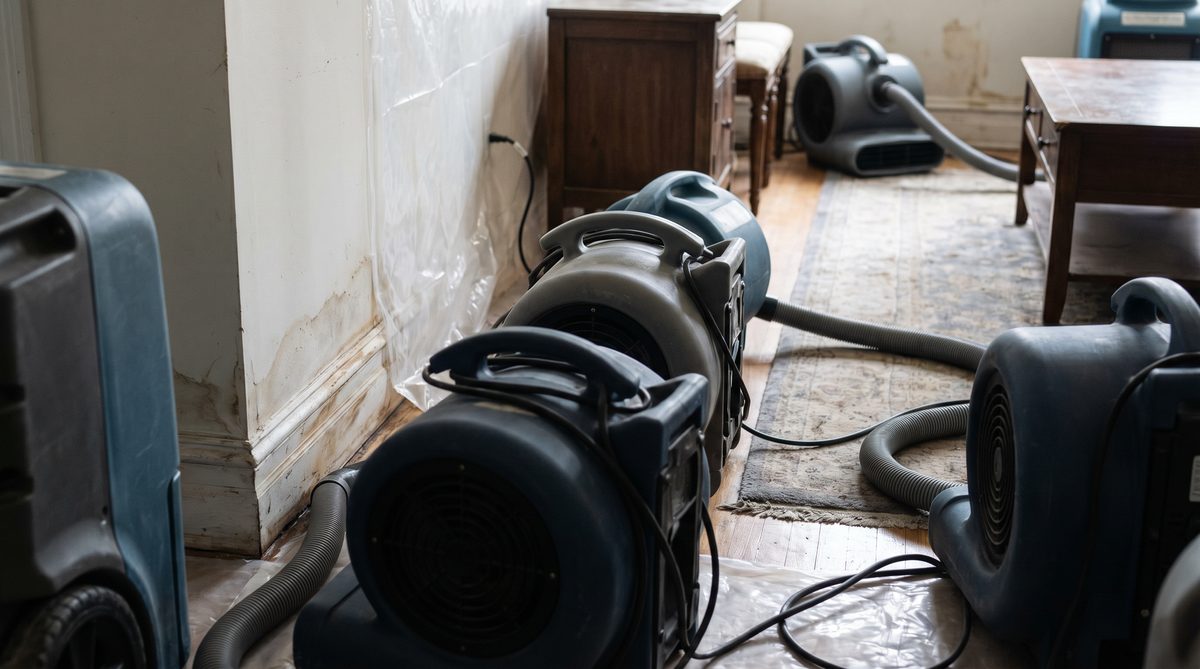
We set up industrial air movers and dehumidifiers in the affected areas, positioning them to create optimal drying conditions. In apartments, we're mindful of noise, space, and the fact that you may still be living in the unit during the drying process. We configure equipment to be as unobtrusive as possible while still getting the job done effectively.
Throughout the drying process, we take regular moisture readings to track progress. Drying typically takes two to five days depending on the extent of the water intrusion and the materials involved. We don't pull equipment until readings confirm that moisture levels have returned to an acceptable range. Rushing this step can lead to problems down the line, including mold growth behind walls.
Moisture Control
Moisture control is about managing humidity and residual dampness during and after the restoration process. Even after active drying is complete, some environments — particularly older Manhattan buildings — can retain elevated moisture levels that need monitoring.
We use professional moisture meters and hygrometers to measure moisture content in building materials and ambient humidity levels. This data tells us whether the drying process is progressing as expected and whether any areas need additional attention. We document readings throughout the process so there's a clear record of conditions.
Proper moisture control is especially important in preventing mold. Mold can begin to develop within 48 to 72 hours in damp conditions, and once it takes hold, it becomes a separate — and often more expensive — problem to address. By monitoring moisture carefully and ensuring thorough drying, we help reduce that risk significantly.
Ceiling & Wall Water Damage
Ceilings and walls are often the most visibly affected surfaces in apartment water damage situations. Water from an upstairs unit, a roof leak, or a burst pipe inside a wall cavity shows up as stains, bubbling paint, sagging drywall, or peeling finishes. These aren't just cosmetic issues — they often indicate moisture trapped inside the wall or ceiling structure.
We address ceiling and wall water damage by first determining the extent of moisture behind the visible surface. In some cases, we need to open up sections of drywall to access and dry the cavity behind it. Once the area is fully dried, we repair or replace the damaged drywall, apply primer, and repaint to match the existing finish as closely as possible.
In apartments, ceiling damage is particularly common because water travels downward from unit to unit. If you notice a water stain spreading on your ceiling, it's worth having it checked even if it seems minor — the damage behind the surface is often more significant than what you can see.
Apartment Water Damage Cleanup
Apartment water damage cleanup is our core focus. Living in a Manhattan apartment means dealing with shared plumbing systems, aging infrastructure, and the reality that water problems in one unit can quickly affect others. When water damage happens in an apartment, the response needs to account for building rules, neighbor coordination, and working within compact spaces.
We handle apartment cleanup from start to finish: water extraction, content protection, structural drying, and surface restoration. We bring equipment sized for apartment work — powerful enough to do the job but compact enough to fit through doorways and operate in smaller rooms. We also coordinate with building management when needed, which is often a necessary part of apartment restoration work.
Whether it's a studio on the Upper East Side or a larger unit in a pre-war building, we adapt our approach to the specific layout and conditions. Apartment water damage is what we do most, and that focus means we've developed practical solutions for the common challenges that come with this type of work.